

Yoga STyles & Poses at ONEYOGAHOUSE
Offering different styles of yoga and their various poses at oneyogahouse is essential to creating a welcoming and inclusive environment for practitioners of all levels and interests.
At OYH, we pull from different yoga styles because we believe there’s no one-size-fits-all approach to practice. Each tradition brings something special—some styles focus on alignment and precision, others on breath and flow, and some invite deep rest and introspection. By mixing them together, we create classes that feel balanced, grounded, and alive, offering students a chance to experience yoga in a way that’s both dynamic and deeply personal.
Some days call for movement and heat, others for stillness and reflection. Drawing from a range of styles gives us the freedom to shape each class around what’s needed in the moment. You might find Katonah-inspired geometry alongside flowing Vinyasa transitions, or a grounding Yin pose tucked into an energizing sequence. This blending keeps things fresh, allows for creativity, and helps students explore their practice from many angles—not just physically, but mentally and emotionally too.
Yoga Poses Navigation
Yoga Styles
Vinyasa Yoga
Vinyasa Yoga is a dynamic and flowing style of yoga that synchronizes movement with breath, creating a seamless sequence of poses. Originating from the traditional Hatha Yoga practice, Vinyasa Yoga offers a modern approach that emphasizes fluidity, mindfulness, and breath awareness. In Vinyasa Yoga, each movement is linked to either an inhale or an exhale, guiding practitioners through a continuous and graceful flow.
Principles of Vinyasa Yoga
Central to Vinyasa Yoga is the principle of breath-centered movement. Practitioners coordinate each posture with either an inhalation or exhalation, creating a rhythmic flow that connects body, breath, and mind. This mindful synchronization cultivates a sense of presence and awareness throughout the practice.
Another key principle of Vinyasa Yoga is the concept of “Vinyasa Krama,” which refers to the intelligent sequencing of poses. Sequences are designed to create a balanced practice that builds strength, flexibility, and endurance while promoting alignment and stability.
In Vinyasa Yoga, there is an emphasis on creative expression and individual exploration. While there may be a general sequence to follow, practitioners are encouraged to adapt and modify poses according to their own body’s needs and limitations. This allows for a personalized practice that can be tailored to suit practitioners of all levels, from beginners to advanced yogis.
Benefits of Vinyasa Yoga
One of the primary benefits of Vinyasa Yoga is its ability to build strength and flexibility. The dynamic nature of the practice, combined with the continuous movement between poses, helps to tone and strengthen muscles while improving flexibility and range of motion.
Vinyasa Yoga is also known for its cardiovascular benefits. The flowing sequences and emphasis on breath awareness can elevate the heart rate, providing a cardiovascular workout that improves endurance and stamina.
Moreover, Vinyasa Yoga promotes mental clarity and stress relief. The focus on breath and mindful movement calms the mind, reducing stress and anxiety while promoting relaxation and inner peace.
Additionally, Vinyasa Yoga offers a holistic approach to wellness, addressing not only the physical body but also the energetic and emotional aspects of the self. Through regular practice, practitioners can experience increased vitality, improved body awareness, and a greater sense of overall well-being.
In summary, Vinyasa Yoga offers a dynamic and transformative practice that integrates breath, movement, and mindfulness to cultivate strength, flexibility, and inner peace.
Katonah Yoga
Katonah Yoga is a unique and holistic approach to yoga that integrates traditional Hatha yoga practices with insights from Chinese medicine, Taoist philosophy, and sacred geometry. Developed by yoga teacher Nevine Michaan, Katonah Yoga offers a comprehensive system for aligning the body, mind, and spirit, drawing upon a rich tapestry of ancient wisdom and modern understanding.
Principles of Katonah Yoga
Central to Katonah Yoga is the principle of “body as metaphor,” which views the physical body as a reflection of one’s internal landscape and psychological patterns. Through the exploration of asana (yoga postures), pranayama (breathwork), and meditation, practitioners learn to identify and transform limiting beliefs and habitual patterns held within the body-mind complex.
Katonah Yoga emphasizes the use of metaphorical imagery, such as “the body as a house” or “the breath as a garment,” to deepen the practitioner’s understanding of alignment, anatomy, and energetic dynamics. By incorporating concepts from Chinese medicine, such as the meridian system and the Five Elements, Katonah Yoga provides a framework for understanding the body’s interconnectedness and promoting balance and vitality.
Benefits of Katonah Yoga
Practicing Katonah Yoga offers a multitude of benefits for physical, mental, and emotional well-being. Through precise alignment and intelligent sequencing, practitioners develop strength, flexibility, and resilience in the body, reducing the risk of injury and enhancing overall physical health.
Furthermore, Katonah Yoga cultivates mental clarity, concentration, and emotional stability through the integration of breathwork and meditative practices. By bringing awareness to the breath and attuning to the present moment, practitioners learn to navigate life’s challenges with greater ease and equanimity.
Additionally, Katonah Yoga fosters a sense of connection and community, providing a supportive environment for personal growth and self-exploration. Through group classes, workshops, and retreats, practitioners have the opportunity to deepen their practice and forge meaningful connections with others on the path of self-discovery.
In summary, Katonah Yoga offers a transformative journey of self-discovery and holistic well-being, blending ancient wisdom with modern insight to cultivate balance, harmony, and vitality in body, mind, and spirit.
Hatha Yoga
Hatha Yoga, one of the most widely practiced forms of yoga in the modern world, traces its origins back to ancient India. The word “Hatha” is derived from the Sanskrit terms “ha” meaning sun and “tha” meaning moon, symbolizing the balance between opposing forces. In essence, Hatha Yoga seeks to achieve harmony between mind, body, and spirit through a combination of physical postures (asanas), breath control (pranayama), and meditation.
Principles of Hatha Yoga
Hatha Yoga operates on the principle that the body and mind are interconnected, and by working on the body, one can also affect the state of the mind. It emphasizes the importance of balance, alignment, and mindful awareness in each posture and breath. Hatha Yoga encourages practitioners to explore their limits with compassion and patience, gradually deepening their practice over time. The practice involves holding poses for extended periods, allowing the body to release tension and improve flexibility. Furthermore, Hatha Yoga incorporates breathing techniques to enhance vitality, calm the mind, and facilitate the flow of prana (life force energy) throughout the body.
Benefits of Hatha Yoga
The practice of Hatha Yoga offers a multitude of benefits for physical, mental, and emotional well-being. Physically, regular practice can improve strength, flexibility, and balance, promoting overall fitness and preventing injury. It also helps to alleviate chronic pain and discomfort by releasing tension and improving posture. On a mental level, Hatha Yoga cultivates mindfulness, concentration, and inner peace through the integration of breath and movement. It provides a space for self-reflection and introspection, allowing practitioners to develop a deeper understanding of themselves and their relationship with the world around them. Emotionally, Hatha Yoga can help reduce stress, anxiety, and depression by promoting relaxation and enhancing emotional resilience. Overall, the practice of Hatha Yoga offers a holistic approach to health and well-being, fostering harmony and balance in all aspects of life.
Restorative Yoga
Restorative yoga offers a serene sanctuary amidst the hustle and bustle of modern life. Rooted in the philosophy of deep relaxation and rejuvenation, this gentle practice provides a nurturing space for individuals to unwind, release tension, and restore balance to the body, mind, and spirit.
Principles of Restorative Yoga
Restorative yoga is grounded in the principle of surrendering to the present moment and allowing the body to find deep relaxation. It emphasizes gentle, supported poses that promote ease and comfort, encouraging practitioners to let go of effort and tension. Breath awareness is central to the practice, guiding practitioners to cultivate slow, mindful breathing patterns that enhance relaxation and presence. Poses are held for extended periods, allowing for a profound release of physical and mental tension and facilitating the body’s natural healing processes.
Benefits of Restorative Yoga
Restorative yoga offers a multitude of benefits for holistic well-being. By inducing the relaxation response in the body, it helps reduce stress levels and promote a sense of calmness and inner peace. The gentle stretching and opening of the body in restorative poses enhance flexibility and relieve muscular tension, improving overall physical comfort and mobility. Additionally, restorative yoga can support better sleep quality by preparing the body and mind for restful sleep. It is also a valuable tool for healing and recovery, offering gentle support for individuals navigating illness, injury, or chronic pain, and fostering a greater sense of resilience and well-being. Ultimately, restorative yoga provides a sanctuary of tranquility where individuals can replenish their energy, nourish their spirits, and reconnect with their innermost selves.
Iyengar Yoga
Iyengar Yoga is a precise and methodical approach to the ancient practice of yoga, named after its founder, B.K.S. Iyengar. This style of yoga emphasizes alignment, precision, and the use of props to support practitioners in achieving optimal posture and balance. With a focus on detail and refinement, Iyengar Yoga is accessible to practitioners of all levels, from beginners to advanced students, and is particularly renowned for its therapeutic benefits.
Principles of Iyengar Yoga
At the heart of Iyengar Yoga lies the principle of alignment, which involves bringing the body into optimal balance and symmetry in each pose. Practitioners are guided to pay meticulous attention to the alignment of their bones, muscles, and joints, ensuring that each posture is performed with integrity and precision. Additionally, Iyengar Yoga emphasizes the use of props such as blocks, straps, and blankets to support the body in achieving proper alignment and to accommodate individual differences in flexibility and anatomy. Through the systematic practice of asanas (postures) and pranayama (breath control), practitioners gradually develop strength, flexibility, and stability, both physically and mentally.
Benefits of Iyengar Yoga
One of the key benefits of Iyengar Yoga is its therapeutic potential. By emphasizing precise alignment and the use of props, this style of yoga can help alleviate various physical ailments and conditions, including back pain, neck tension, and joint stiffness. The practice also promotes overall physical well-being by improving posture, increasing flexibility, and enhancing muscular strength and endurance. Beyond its physical benefits, Iyengar Yoga is renowned for its ability to cultivate mental clarity, focus, and inner awareness. The attention to detail and mindfulness required in each pose fosters a deep sense of presence and concentration, leading to a state of mental calmness and equanimity. Moreover, Iyengar Yoga is inclusive and accessible to individuals of all ages, body types, and fitness levels, making it a versatile and adaptable practice that can be tailored to suit individual needs and abilities. Ultimately, Iyengar Yoga offers a comprehensive approach to health and well-being, combining physical alignment, breath awareness, and mental focus to promote holistic harmony and vitality.
Nada Yoga
Nada Yoga, often referred to as the “Yoga of Sound,” is a spiritual practice deeply rooted in ancient Indian philosophy and tradition. It explores the transformative power of sound and vibration as a means of connecting with the divine and attaining higher states of consciousness. In the practice of Nada Yoga, sound is revered as the primal source of creation, and practitioners seek to harness its sacred resonance to harmonize their inner being with the universal vibration.
Principles of Nada Yoga
Nada Yoga operates on several fundamental principles that guide practitioners in their journey of self-discovery and spiritual awakening. Central to these principles is the understanding that sound permeates all existence and that there exists an internal sound, known as “Anahata Nada,” which can be heard through deep inner listening. Practitioners engage in conscious listening to both external sounds and internal vibrations, utilizing sacred chants, mantras, and meditation techniques to attune themselves to the harmonious rhythms of the universe.
Benefits of Nada Yoga
The practice of Nada Yoga offers a multitude of benefits that extend beyond spiritual realization to encompass holistic well-being. Regular engagement with Nada Yoga can lead to profound stress reduction, as the soothing effects of sound vibrations induce deep relaxation and tranquility. Moreover, Nada Yoga enhances concentration and mental clarity, fostering mindfulness and presence in daily life. Additionally, the therapeutic nature of sound facilitates emotional healing, allowing practitioners to release negative emotions and cultivate inner balance. Overall, Nada Yoga provides a transformative path to inner harmony, spiritual growth, and a deeper connection with the divine through the power of sound.
Somatic Yoga
Somatic yoga is a holistic approach to yoga practice that emphasizes the mind-body connection and focuses on cultivating awareness of internal sensations, movement patterns, and breath. Rooted in the principles of somatics, this form of yoga encourages practitioners to explore movement from within, inviting them to listen to their bodies and move in ways that feel natural and nourishing. Unlike traditional yoga, which often prioritizes external alignment and achieving specific poses, somatic yoga encourages a more introspective and intuitive approach to movement.
Principles of Somatic Yoga
At the core of somatic yoga are several key principles that guide the practice. These principles include embodiment, which involves fully inhabiting and experiencing the body in the present moment; mindfulness, which entails cultivating non-judgmental awareness of internal sensations and thoughts; and movement with awareness, which emphasizes moving consciously and with intention to foster a deeper connection with the body. Additionally, somatic yoga emphasizes the importance of breath as a bridge between the mind and body, guiding practitioners to synchronize movement with the breath to enhance awareness and relaxation.
Benefits of Somatic Yoga
Practicing somatic yoga offers a myriad of benefits for both the body and mind. By cultivating awareness of internal sensations and movement patterns, somatic yoga can help improve posture, flexibility, and mobility while reducing tension and stiffness in the body. The emphasis on mindfulness and breath awareness can also promote stress reduction, relaxation, and emotional well-being, helping practitioners to develop greater resilience and self-regulation in the face of life’s challenges. Moreover, somatic yoga provides a safe and gentle approach to movement that can be adapted to suit individuals of all ages, fitness levels, and physical abilities, making it accessible to a wide range of people seeking to enhance their overall health and vitality.
Ashtanga Yoga
Ashtanga yoga, often referred to as the “eight-limbed yoga,” is a traditional and dynamic form of yoga that traces its roots back to the ancient teachings of the sage Patanjali. It embodies a holistic approach to physical, mental, and spiritual well-being, aiming to cultivate harmony and balance within the practitioner. At its core, Ashtanga yoga emphasizes the synchronizing of breath with a progressive series of postures, creating a flowing and meditative practice that challenges both the body and the mind.
Principles of Ashtanga
Central to the practice of Ashtanga yoga are its eight limbs, which serve as guiding principles for personal development and self-realization. These limbs encompass ethical guidelines (yamas and niyamas), physical postures (asanas), breath control (pranayama), sensory withdrawal (pratyahara), concentration (dharana), meditation (dhyana), and ultimately, union with the divine (samadhi). Each limb builds upon the other, offering a comprehensive framework for spiritual evolution and inner transformation.
Benefits of Ashtanga
The benefits of Ashtanga yoga extend far beyond the physical realm, encompassing various aspects of well-being. Physically, the practice promotes strength, flexibility, and endurance, enhancing overall health and vitality. Moreover, the synchronized breathing techniques employed in Ashtanga yoga foster mental clarity and focus, reducing stress and promoting relaxation. By cultivating mindfulness and self-awareness, practitioners develop a deeper connection with themselves and the world around them, fostering a sense of inner peace and contentment. Additionally, the disciplined nature of Ashtanga yoga instills qualities such as perseverance, patience, and self-discipline, which can be applied to all aspects of life, both on and off the mat. Ultimately, Ashtanga yoga offers a transformative journey of self-discovery and personal growth, empowering individuals to lead more fulfilling and balanced lives.
Yin Yoga
Yin Yoga is a gentle yet profound practice that focuses on deep stretching and relaxation. Rooted in the ancient principles of Taoist philosophy, Yin Yoga targets the connective tissues, such as ligaments, tendons, and fascia, through long-held poses, typically ranging from three to five minutes or even longer. Unlike more dynamic forms of yoga, Yin Yoga encourages practitioners to surrender into each pose, allowing gravity to gently deepen the stretch over time.
Principles of Yin Yoga
At the core of Yin Yoga are several guiding principles that distinguish it from other yoga practices. The first principle is “finding your edge,” which means exploring the limit of sensation in each pose without pushing into pain. This encourages practitioners to cultivate mindfulness and awareness of their bodies, fostering a sense of inner listening and acceptance. Another key principle is “stillness,” emphasizing the importance of remaining in poses for an extended duration to access the deeper layers of the body and mind. By holding poses for an extended period, Yin Yoga promotes relaxation and stimulates the parasympathetic nervous system, facilitating a state of deep calm and tranquility.
Benefits of Yin Yoga
Yin Yoga offers a myriad of benefits for both the body and mind. Physically, the practice helps improve flexibility and joint mobility by gently stretching the connective tissues. It also stimulates the flow of energy, or “qi,” throughout the body, promoting vitality and overall well-being. Additionally, Yin Yoga can alleviate tension and tightness in muscles, relieving chronic pain and discomfort. Beyond the physical benefits, Yin Yoga has profound effects on mental and emotional health. By encouraging stillness and introspection, it cultivates mindfulness and reduces stress and anxiety. Regular practice can enhance emotional resilience and promote a greater sense of inner peace and balance. Overall, Yin Yoga provides a holistic approach to health and wellness, nourishing the body, mind, and spirit.
Yoga Poses
Basics
Learning the basics of yoga is important because foundational poses help build the strength, flexibility, balance, and body awareness needed for a safe and effective practice. Rather than simply trying to perform advanced movements, beginners can benefit from understanding how to position their body, control their breathing, and move with intention. Basic poses also provide an opportunity to recognize personal limitations and develop proper alignment, which can help reduce unnecessary strain or injury. With a strong foundation, practitioners can gradually progress to more challenging poses with greater confidence and control.
Beyond the physical benefits, learning basic yoga poses can introduce practitioners to the broader purpose of yoga. Yoga is not simply a series of stretches or exercises; it can also encourage mindfulness, relaxation, concentration, and a stronger connection between the body and mind. Taking time to learn the fundamentals allows people to focus on how a pose feels rather than worrying about how it looks. This makes yoga more accessible and adaptable to different bodies, abilities, and experience levels, while creating a foundation for a practice that can continue to develop over time.
Basic Yoga Poses

4-Limbed Staff Pose
Chaturanga Dandasana, or Four-Limbed Staff Pose, is a 2,000-year-old foundational yoga posture in which the body is held parallel to the ground, supported by hands and feet with elbows bent at right angles.

Big Toe Pose
The intent of the Big Toe Pose in yoga, or Padangusthasana, is to promote physical health but also mental clarity. The yoga pose is significant in Hatha Yoga traditions, where it’s thought to stimulate the energy channels within the body

Cat Pose
Cat pose, or Marjaryasana in Sanskrit, is a gentle yoga posture often used to warm up the spine and create flexibility. It is known for promoting mobility in the vertebrae while also providing a release of tension in the back

Chair Pose
The Chair Pose, or Utkatasana in Sanskrit, embodies strength, stability, and grounding. It requires engagement of the leg muscles, core, and glutes to maintain a sense of balance and stability. The yoga practitioner should feel as if they’re sitting in

Child’s Pose
Child’s Pose, or Balasana in Sanskrit, is a deeply restorative yoga posture that fosters relaxation and introspection. It’s especially great for stretching the lower back muscles, hips, and thighs. Child’s pose can be used during the warmup to promote grounding,

Cobra Pose
Cobra Pose, or Bhujangasana in Sanskrit, is a great way to open up the back and shoulders. This yoga pose can be used during a warmup or as part of a transition during a yoga sequence. For those who sit

Cow Pose
Cow Pose, known as Bitilasana in Sanskrit, is a yoga pose that promotes flexibility and mobility within the spine. With the neck lifted, the chest can open, and the belly can stretch. This helps provide a sense of general openness

Downward Facing Dog
The Downward Facing Dog yoga pose, known as Adho Mukha Svanasana in Sanskrit, is considered one of the most fundamental yoga poses. This pose can be used throughout the practice, whether in a Sun Salutation sequence or as a transition

Easy Seat
Easy Seat, or Sukhasana, is simplicity at its finest. With crossed legs and a straight spine, practitioners can begin to ground and find an internal sense of peace and connection. This yoga pose helps students concentrate on the breath while

Exalted Warrior
Also referred to as Reverse Warrior or Viparita Virabhadrasana in Sanskrit, Exalted Warrior is a powerful yet graceful yoga pose. It combines strength with a sense of openness and expansion, inviting practitioners to maintain balance and steadiness while stretching the

Forward Fold
Forward Fold, also known as Uttanasana in Sanskrit, is a fundamental posture for the practice. With feet hip-width apart and the upper body surrendering to the ground, this yoga pose offers a deep stretch and release in the hamstrings, calves,

Half Split
The half split yoga pose, also known as Ardha Hanumanasana in Sanskrit, offers deep hamstring strength. With one leg forward and the other leg extended behind, the hips are squarely facing front in this pose. It can be a preparatory

Half Way Lift
Halfway Lift, or Ardha Uttanasana in Sanskrit, is a transitional yoga pose that lengthens the spine and activates the core. The pose is traditionally used in Sun Salutations, as a transition between forward fold and stepping or jumping back to

Hand to Foot Pose
The Hand to Foot yoga pose, also known as Padahastasana in Sanskrit, is a deep forward fold stretch. With the goal of touching the hands to the feet so the toes graze the wrist crests, this pose can be a

Hero’s Pose
Hero’s Pose, or Virasana in Sanskrit, is a seated yoga posture that promotes stillness and grounding. It stretches the quadriceps, knees, and ankles while promoting an upright and open posture through the spine and chest. While simple in nature, this

High Crescent Lunge
High Crescent Lunge, or Ashta Chandrasana in Sanskrit, embodies the essence of yoga: strength, balance, and poise. With one leg extended forward into a deep lunge and the other leg straight and engaged in the back, the practitioner must focus

High Prayer
High Prayer Pose, often referred to as Urdhva Namaskarasana, is a grounding and centering yoga posture that emphasizes alignment and mindfulness. It is typically performed at the beginning or end of a yoga practice to cultivate intention, focus, and gratitude.

Humble Warrior
Humble Warrior, or Baddha Virabhadrasana in Sanskrit, is an introspective yoga pose that combines strength, surrender, and balance. The torso bows forward, and the arms extend overhead into the air, encouraging a sense of humility and inner reflection. It’s the

Lotus Pose
Lotus Pose, or Padmasana in sanskrit, is a classic seated yoga posture deeply associated with meditation and mindfulness. Symbolizing purity and enlightenment, it is often used in meditative practices to promote inner peace and stillness. The pose encourages a grounded

Low Crescent Lunge
The Low Crescent Lunge, also known as Anjaneyasana in Sanskrit, is a yoga pose that embodies a graceful balance between strength and surrender. The practitioner sinks into a deep lunge, with one knee bent and the other extended behind. This

Low Lunge Twist
The Low Lunge Twist, or Parivrtta Anjaneyasana in Sanskrit, combines the grounding qualities of a lunge with the detoxifying benefits of a twist. This yoga pose engages the lower body, while the twisting motion stimulates the digestive organs and promotes

Mountain Pose
The Mountain Pose, or Tadasana in Sanskrit, is one of the most fundamental yoga postures. Standing tall, with feet grounded firmly on the earth, legs engaged, and spine elongated, this steady pose encourages grounding, centeredness, and strength. This pose can

Plank Pose
Plank Pose, or Phalakasana in Sanskrit, is a fundamental yoga posture that builds core strength, stability, and endurance. It requires full-body effort, engaging the abdominal muscles, shoulders, arms, and legs. Holding this pose requires focus and intentional breathwork. This yoga

Pyramid
The pyramid pose, known as Parsvottanasana in Sanskrit, embodies both strength and surrender. With the torso extended forward and the feet grounded to the earth, Pyramid Pose can provide a deep stretch in the hamstrings, calves, and back. This yoga

Side Plank
Side Plank, or Vasisthasana in Sanskrit, is a powerful yoga pose that builds strength, stability, and balance. This pose primarily engages the oblique muscles, shoulders, and arms while also strengthening the legs and improving core stability. For a modification, practitioners

Three Legged Dog
Three-Legged Downward Facing Dog pose, or Tri Pada Adho Mukha Svanasana in Sanskrit, is an expansive yoga pose that creates a dynamic triangle shape: one leg is lifted into the air while the hands are firmly rooted into the mat.

Upward Facing Dog
Upward-Facing Dog, or Urdhva Mukha Svanasana in Sanskrit, is a foundational yoga pose. It is used as a transition within various sequences in a practice. In this pose, the tops of the feet and hands are grounded into the floor

Warrior 1
Warrior I Pose, or Virabhadrasana I in Sanskrit, is a cornerstone posture in yoga practice. The legs are fully engaged, which aids in strengthening and toning. The chest is expanded, which opens the heart and can bring up feelings of

Warrior 2
Warrior II, or Virabhadrasana II in Sanskrit, is another foundational yoga posture. This pose embodies the very essence of a warrior: strength, resilience, coordination, and focus. The gaze is steady, looking forward, while both arms are fully extended. The feet

Wide Legged Forward Fold
Wide-Legged Forward Fold, or Prasarita Padottanasana in Sanskrit, is a grounding yoga pose that encourages deep release and introspection. The practitioner's head is toward the ground, with the feet extended wide across the yoga mat. The arms can be extended
Open Hips
Hip-opening yoga poses are designed to increase mobility and flexibility around the hips and the surrounding muscles. The hips are central to many everyday movements, including walking, sitting, bending, and changing direction, so maintaining mobility in this area can support comfortable and efficient movement. Yoga that focuses on opening the hips can help release muscular tension, improve range of motion, and create greater awareness of how the body moves and holds tension. Rather than simply trying to make the hips more flexible, the purpose is to develop a balanced combination of mobility, stability, strength, and ease.
Hip-opening poses can also have a more subtle purpose within yoga. The hips are often associated with areas of physical and emotional tension, and a slower, mindful practice can provide an opportunity to notice and release some of that tension. Through conscious breathing, relaxation, and sustained attention, practitioners may experience a greater sense of grounding and relaxation. Ultimately, hip-focused yoga is less about achieving a particular shape and more about creating space for comfortable movement, body awareness, and a deeper connection between breath, body, and mind.
Open Hip Yoga Poses

Extended Side Angle
Extended Side Angle, or Utthita Parsvakonasana in Sanskrit, is great yoga pose for stretching the sides of the body, including the obliques, ribs, and intercostal muscles. It can also help open up the hips and chest. It’s another pose that

Garland Pose
The Garland yoga pose, also known as Malasana in Sanskrit, is a yoga pose that embodies a sense of grounding and openness. This deep squat requires strength and flexibility, and encourages practitioners to let go of tension and stress. The

Goddess
The Goddess Pose, or Utkata Konasana in Sanskrit, is a yoga pose that embodies feminine strength, power, and openness. This graceful pose has the practitioner standing with legs wide apart and the toes turned outward. The arms can be extended

Half Moon
The Half Moon yoga pose, or Ardha Chandrasana in Sanskrit, is a dynamic posture. With one leg on the ground and the other leg extended in the opposite direction with the corresponding arm, the practitioner should feel a sense of

Half Squat
The Half Squat, or Skandasana in Sanskrit, is a dynamic yoga pose emphasizing flexibility, strength, and balance. This squat position stretches the hamstrings, calves, and groin while also strengthening the quadriceps and ankles. This is great for anyone looking to

Reverse Triangle
Reverse Triangle, or Parivrtta Trikonasana in Sanskrit, is a standing yoga pose that involves a deep twist through the spine, which can help with detoxification and circulation. This pose stretches and strengthens the legs, hips, and chest while enhancing mobility

Reverse Warrior
Reverse Warrior, or Viparita Virabhadrasana, is a powerful yoga pose that blends strength and grace, offering a deep lateral stretch while enhancing stability and balance. This pose is particularly effective at opening the side body, stretching the intercostal muscles, obliques,

Triangle
Triangle Pose, or Trikonasana in Sanskrit, embodies a graceful, geometrically precise stance. In this yoga pose, the body forms a triangular shape, symbolizing stability, balance, and expansion. The alignment of the body in Triangle Pose opens the chest and hips,
Twists
Twisting yoga poses are designed to promote mobility through the spine while engaging the muscles of the core, back, and torso. Because the spine naturally moves in several directions, maintaining rotational mobility can support everyday movements such as turning, reaching, and changing direction. Twisting poses can also encourage greater awareness of spinal alignment and posture, while helping to create a sense of length and space through the torso. Their purpose is not to force the body into a deeper rotation, but to explore comfortable movement while balancing mobility with stability and control.
Twisting poses can also bring a mindful and grounding quality to a yoga practice. Coordinating the breath with spinal movement encourages practitioners to slow down, focus their attention, and become more aware of sensations within the body. Twists may create a feeling of openness through the chest and torso and can provide an opportunity to release muscular tension. Ultimately, twisting poses are less about how far the body can rotate and more about developing spinal awareness, controlled mobility, balance, and a deeper connection between movement and breath.
Twists Yoga Poses

Revolved Chair
Revolved Chair Pose, or Parivrtta Utkatasana in Sanskrit, is a dynamic twisting posture that combines strength and balance. This yoga pose deeply engages the legs and glutes while activating the core through the spinal twisting movement. The twisting action stimulates

Revolved Half Moon
Revolved Half Moon, or Parivrtta Ardha Chandrasana in Sanskrit, is a challenging yoga pose that combines balance, strength, and flexibility. This pose engages the core and leg muscles while promoting spinal rotation and opening through the chest and shoulders.

Revolved Side Angle
Revolved Side Angle increases spinal rotation and strengthens the lower body while challenging balance and enhancing breath control

Revolved Standing Hand to Big Toe Pose
Revolved Standing Hand to Big Toe Pose, or Parivrtta Utthita Hasta Padangusthasana in Sanskrit, is a challenging balancing posture that combines flexibility, strength, and deep spinal rotation. This standing yoga pose engages the core, legs, and stabilizing muscles to maintain

Revolved Triangle
Revolved Triangle, or Parivrtta Trikonasana in Sanskrit, is a standing yoga posture that deeply stretches and opens the muscles of the legs, hips, and spine. This twisting motion is beneficial for stimulating the abdominal organs, aiding in detoxification and digestion.
Standing / Balancing
Standing and balancing yoga poses are designed to develop strength, stability, coordination, and body awareness. Because these poses require the body to support itself while maintaining alignment, they engage the legs, feet, core, and other stabilizing muscles. They can help improve proprioception—the body’s awareness of its position in space—and encourage greater control over posture and movement. Rather than focusing solely on remaining still or achieving a particular shape, the purpose is to develop a sense of groundedness and stability while learning to respond to subtle shifts in balance.
Balancing poses also encourage concentration and mental focus. Maintaining balance often requires practitioners to coordinate breath, movement, and attention, creating an opportunity to become more present and aware. They can teach patience and adaptability, as balance naturally changes from moment to moment and is influenced by factors such as fatigue, focus, and the environment. Ultimately, standing and balancing poses are about cultivating strength and stability while developing confidence, concentration, body awareness, and a greater sense of connection between the mind and body.
Standing / Balancing Yoga Poses

Dancer’s Pose
Dancer’s Pose, or Natarajasana in Sanskrit, is a yoga pose that opens the heart while stretching the chest, shoulders, and inner thigh muscles. It’s great for flexing the spine and hips. Seen as a graceful yoga pose, Dancer’s Pose teaches

Eagle Pose
Eagle Pose, known as Garudasana in Sanskrit, requires coordination, focus, and flexibility. This yoga pose weaves the arms and legs, which can stimulate circulation in the joints. It also requires balance, with one foot wrapped behind the other in a

Half Chair Pose
The half chair pose, or Ardha Utkatasana in Sanskrit, is a challenging yoga pose that requires both strength and endurance. With one leg flexed and crossed over the standing leg, the practitioner must engage the thighs and glutes while activating

One-Legged Mountain
One-Legged Mountain Pose, or Eka Pada Tadasana in Sanskrit, is a balancing yoga posture oftentimes used as a preparatory pose for advanced balances. It requires physical and mental effort to remain steady, with one leg firmly grounded and the other

Tree Pose
Tree Pose, or Vrksasana in Sanskrit, is a grounding and balancing posture that symbolizes stability and growth. This yoga pose fosters a deep connection between the body and the mind, encouraging focus and calm while improving balance and coordination. Tree

Warrior 3
Warrior III, or Virabhadrasana III in Sanskrit, is a dynamic balancing pose that requires both strength and focus. This yoga pose engages the entire body, particularly the core, legs, and back, to maintain stability while extending through the arms and
Common Inversions
Common inversions are yoga poses in which the head is positioned below the heart, creating a different relationship between the body and gravity. They can help develop upper-body and core strength, coordination, balance, and spatial awareness, depending on the type of inversion. Inversions also encourage practitioners to explore how the body responds when its usual orientation is changed. Their purpose is not simply to get upside down, but to build strength, control, confidence, and awareness while maintaining steady breathing and mindful alignment.
Inversions can also offer a mental and emotional challenge by asking practitioners to approach movement from a different perspective. Being upside down can require increased concentration and a willingness to remain calm in an unfamiliar position. With consistent, mindful practice, inversions can help develop patience, focus, and confidence while encouraging practitioners to listen closely to their bodies. Ultimately, the value of inversions lies less in achieving an impressive shape and more in cultivating strength, balance, awareness, and a sense of curiosity toward movement.
Common Inversion Yoga Poses

Crow Pose
Crow Pose, or Bakasana in Sanskrit, requires strength, focus, and playfulness. It’s a challenging yoga pose that engages the core, arms, and wrists while practicing balance and control. This can be used as a peak posture within a class, cultivating

Dolphin Pose
Dolphin Pose, or Ardha Pincha Mayurasana in Sanskrit, is an inversion that strengthens the shoulders, arms, and core while stretching the hamstring and calf muscles. It can be used as an introductory yoga posture to more advanced inversions, such as

Forearm Stand
Forearm Stand, or Pincha Mayurasana in Sanskrit, is an advanced inversion yoga pose requiring upper-body strength, core stability, and balance.

Handstand
Handstand, or Adho Mukha Vrksasana in Sanskrit, is a challenging inversion that requires a combination of core engagement, shoulder stability, and mental concentration. Practicing this yoga pose can build overall body awareness as well as coordination. Typically a peak posture,

Headstand
The Headstand, or Sirsasana in Sanskrit, is often referred to as the “king of yoga poses” due to its ability to cultivate focus and strength. This inversion pose encourages increased blood flow to the brain, which can boost mental clarity,
Backbends
backbending yoga poses are designed to develop mobility and strength through the spine, hips, shoulders, and the muscles of the back and core. Because modern daily activities often involve prolonged sitting or forward-oriented movement, backbends can provide an opportunity to explore spinal extension and movement in the opposite direction. Their purpose is not to force the spine into a deeper curve, but to encourage balanced mobility, muscular support, and awareness of how the body moves through extension. When approached mindfully, backbends can also help practitioners develop greater control and confidence in their range of motion.
Backbends can have an energizing and expansive quality within a yoga practice. They often involve opening through the front of the body, which can create a sense of spaciousness through the chest, shoulders, and abdomen. Coordinating breath with movement can further encourage awareness and focus, while the physical challenge of supporting the body through extension can cultivate strength and resilience. Ultimately, backbends are less about achieving the deepest possible shape and more about creating a balanced relationship between strength, mobility, breath, and body awareness.
Backbend Yoga Poses
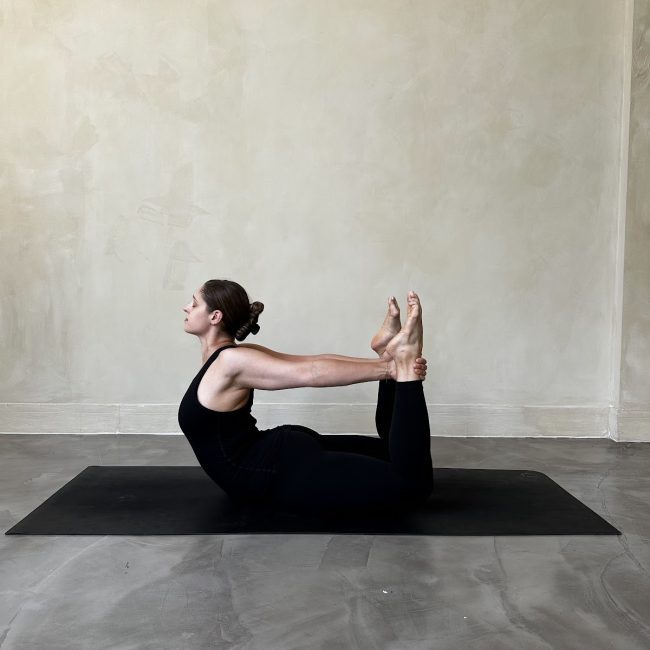
Bow
Bow Pose, or Dhanurasana in Sanskrit, is a deep yoga backbend that opens the chest, shoulders, and hip flexors. With the chest expanded upward and outward, it’s great for strengthening the backside muscles of the body. Bow pose also stimulates

Bridge Pose
Bridge Pose, or Setu Bandhasana in Sanskrit, is a gentle yoga backbend that is often used toward the end of practice before Savasana. It opens the chest, shoulders, and hip flexors, preparing them for relaxation and stillness. It’s still a

Camel Pose
Camel Pose, known as Ustrasana in Sanskrit, is a challenging yoga backbend that strengthens the spine. It expands the shoulders, abdomen, and flexibility. This yoga pose puts the body in a vulnerable position, opening the chest and heart to the

Locust
Locust Pose, known as Salabhasana in Sanskrit, is a yoga backbend that energizes the entire body. It targets the muscles of the spine, glutes, and hamstrings, building endurance and supporting healthy posture. For anyone who sits at a desk for

Sphinx Pose
Sphinx Pose, or Salamba Bhujangasana in Sanskrit, is a gentle yoga backbend. It strengthens the spine and opens up the chest, making it an excellent pose for improving posture and releasing tension. It is often used in restorative and therapeutic

Wheel Pose
Wheel Pose, or Urdhva Dhanurasana in Sanskrit, is an invigorating yoga backbend. It’s a deep heart-opening pose, stretching the chest, shoulders, and hip flexors while strengthening the arms, legs, and spine. This pose is generally used toward the end of
Seated / Yin
Seated and yin yoga poses are designed to encourage stillness, gentle mobility, and a deeper awareness of the body. Unlike more active styles of yoga, these poses are often held for longer periods of time, allowing the body to gradually settle and relax. This slower approach can provide an opportunity to explore areas of tension and restriction without forcing movement or seeking a particular shape. The purpose is to cultivate patience and ease while allowing the body to experience sustained, gentle sensations and a more passive approach to flexibility.
Seated and yin poses also offer a valuable opportunity to shift attention inward. Remaining still for an extended period encourages practitioners to observe their breath, physical sensations, thoughts, and emotional responses without needing to immediately change them. This can create a calming and meditative quality while developing greater body awareness and the ability to remain present. Ultimately, seated and yin poses are less about how deeply the body can move and more about creating space for stillness, relaxation, mindfulness, and a deeper connection between the body and mind.
Seated / Yin Yoga Poses

Boat Pose
Boat Pose, known as Navasana in Sanskrit, is a core-strengthening posture. By collectively activating the abdominal muscles, hip flexors, and spine, boat pose is known to help with stability, balance, and endurance. Besides being a physically challenging yoga pose, Navasana

Butterfly
The Butterfly Pose, known as Baddha Konasana in Sanskrit, is a restorative seated yoga pose that gently opens the hips, groin, and inner thighs. It’s often used as a grounding exercise, either during a warmup or cooldown session. Butterfly Pose

Corpse Pose
Corpse Pose, or Savasana in Sanskrit, is a deep, relaxing and restorative yoga pose. It encourages the practitioner to completely surrender, letting every muscle relax into the mat. Oftentimes used at the very end of a practice, this pose is

Cow Face
Cow Face Pose, or Gomukhasana in Sanskrit, is a yoga pose that opens up the shoulders, hips, and thighs. By crossing the knees and grasping the outer edges of the hands at the same time, this yoga pose provides a

Double Pigeon
Double Pigeon, also known as Firelog Pose or Agnistambhasana in Sanskrit, can be a deep hip-opening stretch, targeting the outer hips, glutes, and lower back. By opening up these muscles, this yoga pose can release tension within these lower muscle

Fish Pose
Fish pose, or Matsyasana in Sanskrit, is a deep heart-opening yoga posture. It expands and opens the front body, stimulating the respiratory and cardiovascular systems while enhancing breath capacity. It is associated with both the throat and heart chakras. This

Frog Pose
Frog Pose, or Bhekasana in Sanskrit, is great to use for improving flexibility. With the body splayed out on the floor, hips piked up, and the arms extended into a T-position, this yoga pose targets the inner thighs, groin, and

Half Pigeon
Half Pigeon Pose, known as Ardha Kapotasana in Sanskrit, is a grounding, hip opening yoga pose that invites stillness and introspection. Targeting the hips, glutes, and lower back, Half Pigeon is great for releasing any stored tension or stress within

Happy Baby
Happy Baby, or Ananda Balasana in Sanskrit, is a playful, restorative yoga pose that encourages gentle stretching and relaxation. This posture targets the inner thighs, hips, and lower back, helping to release tension and create a sense of openness throughout

Head to Knee Pose
Head to Knee Pose, known as Janu Sirsasana in Sanskrit, is a seated forward bend yoga pose. This pose is often used as part of a cool-down or restorative sequence, targeting the hamstrings, hips, and lower back. With the head

Plow Pose
Plow Pose, or Halasana in Sanskrit, is an inversion that promotes flexibility in the spine and shoulders. With the toes reaching behind the head while lying down, this yoga pose can be quite restorative and activates the parasympathetic nervous system.

Reclined Hero’s Pose
Reclined Hero’s Pose, or Supta Virasana in Sanskrit, is a deeply restorative yoga pose that activates and stretches the thighs, knees, and hips. This pose encourages stillness and can help calm the nervous system. It’s oftentimes used to counterbalance active

Reclined Pigeon Pose
Reclined Pigeon, often referred to as Figure Four Pose or Supta Kapotasana in Sanskrit, is a soothing yoga pose that targets the hips and glutes. It’s an effective way to release tension in the lower half of the body, which

Reverse Plank
Reverse Plank, also known as Purvottanasana in Sanskrit, emphasizes strength, openness, and balance. This yoga pose engages the posterior chain, including the glutes, hamstrings, and back muscles, while also providing a deep stretch across the chest, shoulders, and front body.

Revolved Head to Knee Pose
Revolved Head to Knee Pose, or Parivrtta Janu Sirsasana in Sanskrit, is a seated twisting yoga pose that combines side stretch, forward fold, and spinal rotation. It stretches the hamstrings, hips, and spine, while also opening the chest and side

Sage Marichi Pose A
Sage Marichi Pose A, or Marichyasana A, is named after the sage Marichi, grandfather of the Sun God. This yoga pose integrates flexibility and strength with introspection, offering a deep stretch to the hips, hamstrings, and spine. Often practiced as

Sage Marichi Pose C
Sage Marichi’s Pose C, or Marichyasana C, is a seated twisting posture yoga pose that emphasizes spinal mobility and digestive health. Named after the sage Marichi, this pose combines a deep spinal twist with grounded stability, engaging the core and

Seated Forward Fold
Seated Forward Fold, known as Paschimottanasana in Sanskrit, is a calming and introspective yoga pose that is commonly used in restorative or meditative sequences to support a sense of calm, grounding, and emotional balance. It targets the hamstrings, lower back,

Seated Staff
Seated Staff Pose, or Dandasana in Sanskrit, is a foundational seated yoga pose that is the starting point for many seated poses. It emphasizes alignment, strength, and mindful stillness, creating awareness of posture and balance while promoting engagement of the

Shoulder Stand
Shoulder Stand, or Sarvangasana in Sanskrit, is a revered inversion that is often referred to as the “queen of all poses” due to its wide-ranging benefits. This yoga pose strengthens the upper body and core, enhancing flexibility in the neck

Supine Spinal Twist
Supine Sinal Twist, or Supta Matsyendrasana in Sanskrit, is a restorative yoga pose known for its ability to release tension in the spine and promote deep relaxation. It gently stretches the back, shoulders, and hips while encouraging detoxification and stimulating

Wide Straddle Seated Forward Fold
Wide Straddle Seated Forward Fold, or Upavistha Konasana in Sanskrit, is a grounding, introspective yoga pose that emphasizes deep stretching. This posture targets the inner thighs, hamstrings, and lower back, promoting flexibility and releasing physical tension in the hips and